
graphite electrode
What is a graphite electrode?
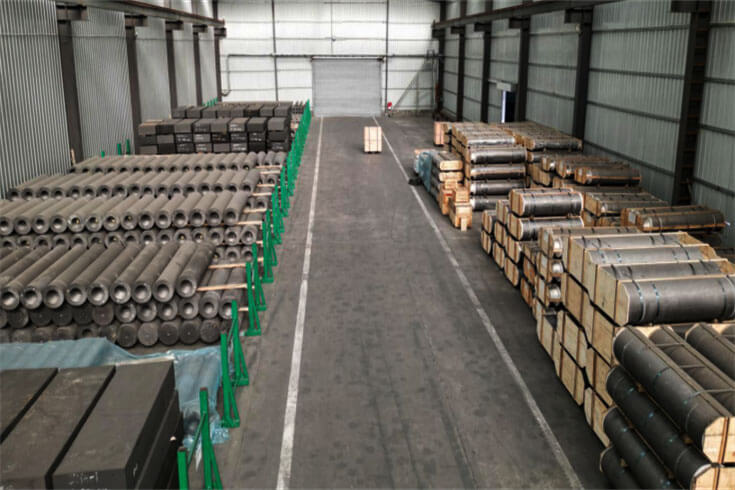
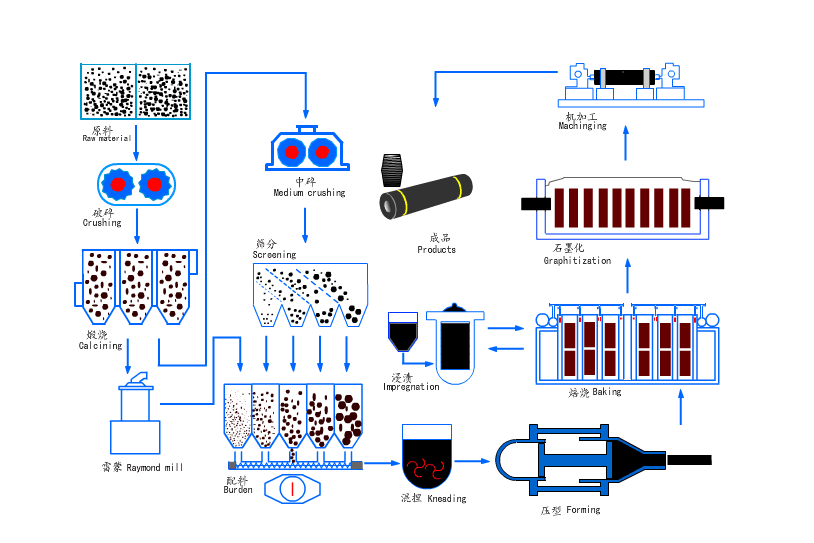
Graphite electrode refers to a kind of resistant electrode made of petroleum coke and pitch coke as aggregates and coal pitch as the binder. It is made by calcining raw materials, crushing and grinding, batching, kneading, shaping, roasting, impregnation, graphitization, and mechanical processing. High-temperature graphite conductive material.
The main raw material for graphite electrode production is petroleum coke. A small amount of pitch coke can be added to ordinary power graphite electrodes. The sulfur content of both petroleum coke and pitch coke cannot exceed 0.5%. Needle coke is also required when producing high-power or ultra-high-power graphite electrodes. The main raw material for aluminum anode production is petroleum coke, and the sulfur content is controlled to be no more than 1.5% to 2%. Petroleum coke and pitch coke should comply with relevant national quality standards.
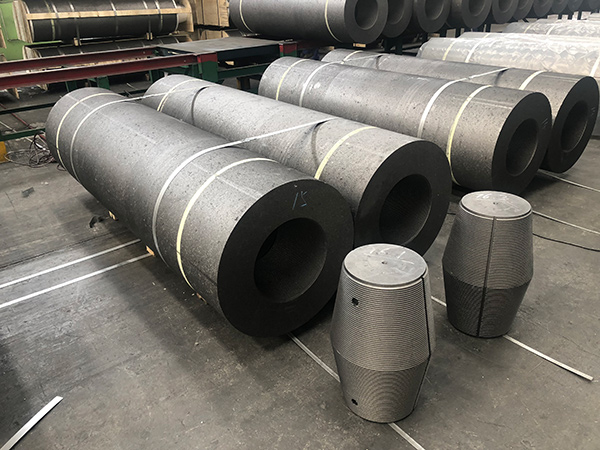
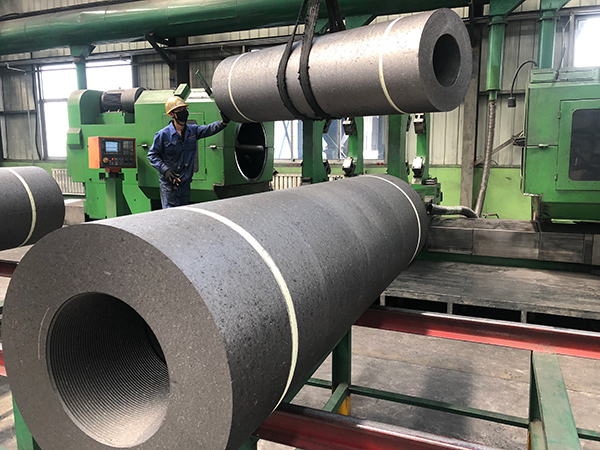
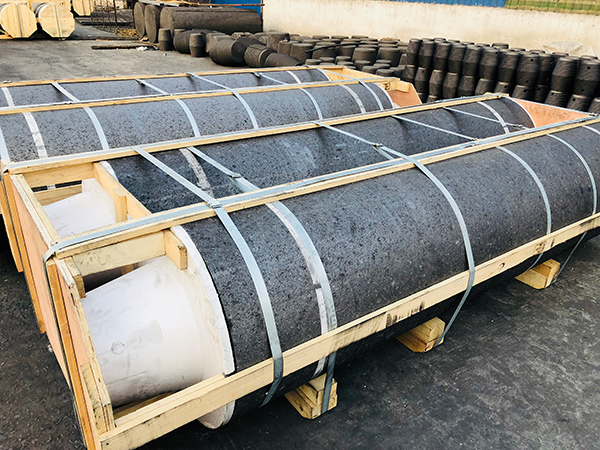
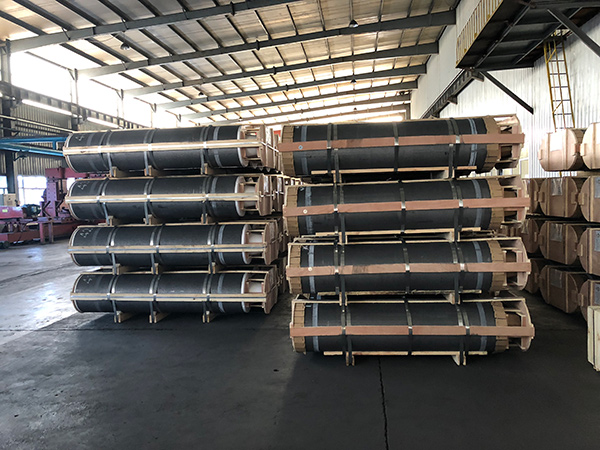
Graphite electrode types
According to the different raw materials and physical and chemical indicators of the finished products, graphite electrodes can be divided into four categories, namely regular power graphite electrodes(RP), high-power graphite electrodes(HP), ultra-high power graphite electrodes(UHP), and super high power graphite electrode(SHP).
The Physical And Chemical Indexes Of RP, HP, SHP, And UHP Graphite Electrode
| Item | RP Graphite Electrode | |
| Nominal Diameter /mm | Current Carrying Capacity/A | Current Density / (A/cm2) |
| 150 | 3000~4500 | 16~25 |
| 200 | 5000~6900 | 15~21 |
| 250 | 7000~10000 | 14~20 |
| 300 | 10000~13000 | 14~18 |
| 350 | 13500~18000 | 14~18 |
| 400 | 18000~23500 | 14~18 |
| 450 | 22000~27000 | 13~17 |
| 500 | 25000~32000 | 13~16 |
| 550 | 28000~34000 | 12~14 |
| 600 | 30000~36000 | 11~13 |
| 650 | 32000~39000 | 10~12 |
| 700 | 34000~42000 | 9~11 |
| Item | HP Graphite Electrode | |
| Nominal Diameter /mm | Current Carrying Capacity/A | Current Density / (A/cm2) |
| 150 | – | – |
| 200 | 5500~9000 | 18~25 |
| 250 | 8000~13000 | 18~25 |
| 300 | 13000~17400 | 17~24 |
| 350 | 17400~24000 | 17~24 |
| 400 | 21000~31000 | 16~24 |
| 450 | 25000~40000 | 15~24 |
| 500 | 30000~48000 | 15~24 |
| 550 | 34000~53000 | 14~22 |
| 600 | 38000~58000 | 13~21 |
| 650 | 41000~65000 | 12~20 |
| 700 | 45000~72000 | 12~19 |
| Item | SHP Graphite Electrode | |
| Nominal Diameter /mm | Current Carrying Capacity/A | Current Density / (A/cm2) |
| 300 | 14000~20000 | 19~28 |
| 350 | 18000~26000 | 18~27 |
| 400 | 23000~33000 | 18~26 |
| 450 | 27000~42000 | 17~26 |
| 500 | 34000~52000 | 17~26 |
| 550 | 40000~60000 | 16~24 |
| 600 | 45000~70000 | 16~24 |
| Item | UHP Graphite Electrode | |
| Nominal Diameter /mm | Current Carrying Capacity/A | Current Density / (A/cm2) |
| 150 | – | – |
| 200 | – | – |
| 250 | – | – |
| 300 | 15000~22000 | 20~30 |
| 350 | 20000~30000 | 20~30 |
| 400 | 25000~40000 | 19~30 |
| 450 | 32000~45000 | 19~27 |
| 500 | 38000~55000 | 18~27 |
| 550 | 45000~65000 | 18~27 |
| 600 | 50000~75000 | 18~26 |
| 650 | 60000~85000 | 18~25 |
| 700 | 70000~120000 | 18~30 |
The production process of graphite electrodes
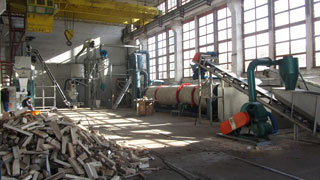
The production process of graphite electrodes mainly includes raw product manufacturing (crushing, batching, kneading, forming), roasting, impregnation (primary impregnation, secondary impregnation), re-baking, graphitization, mechanical processing, and other processes. Among them, the main process of roasting has a relatively long production cycle.
The production cycle of ordinary power graphite electrode bodies takes about 3 months, while the production cycle of ultra-high power graphite electrodes takes about 5 months.
Why graphite is used as electrode?
Graphite is used in making electrodes because it is a good conductor of electricity due to the presence of free electrons. One valence electron of each carbon atom remains free and thus it is a good conductor of electricity.
Graphite electrodes can conduct electricity and generate electricity to melt scrap iron or other raw materials in blast furnaces to produce steel and other metal products. They are mainly used to make steel. Graphite electrodes are the only material with low resistivity that can withstand thermal gradients within an electric arc furnace. It is mainly used for steelmaking, as well as smelting yellow phosphorus, industrial silicon, abrasives, etc. It is a conductor that releases electric energy in an arc form in an electric furnace to heat and melt the charge.
Who uses graphite electrodes?
Graphite Electrodes find application in the manufacture of Steel and other non-ferrous metals through the Electric Arc Furnace and the Laddle Furnace routes. It is used as a consumable for conducting high current at low voltage which is necessary for melting and/or alloying processes.
EAF steelmaking
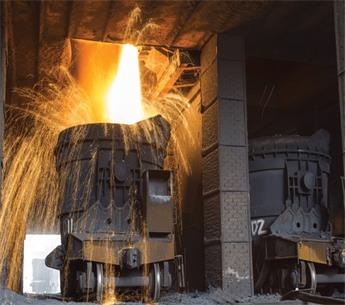
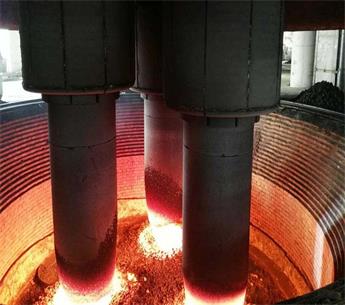
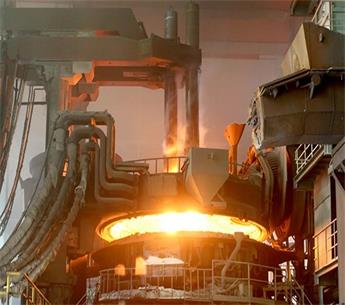
70% – 80% of consumption of the graphite electrode is used in EAF steelmaking. In EAF steelmaking, the graphite electrode is used to conduct electric current into the furnace. The high-temperature heat source for smelting is generated by arcing between the electrode and steel scraps.
Application of graphite electrodes
- Steel Industry: In the steel industry, graphite electrodes are mainly used in electric arc furnace steelmaking. The electric arc furnace uses the arc generated between the graphite electrode and the charge to smelt metal to achieve the purpose of refining molten steel. Graphite electrodes play the dual roles of conductivity and high-temperature resistance in this process, ensuring the smooth progress of the electric furnace steelmaking process.
- Battery industry: Graphite electrodes are also important raw materials for lithium batteries and lead-acid batteries. In batteries, graphite electrodes serve as negative electrode materials and can store and release large amounts of electrical energy. Its excellent conductivity and stability help improve battery performance and life.
- Semiconductor industry: Graphite electrodes are mainly used in the semiconductor industry for the growth of wide bandgap semiconductors such as silicon carbide and gallium nitride. These semiconductor materials are grown on graphite electrodes and processed to create high-performance electronic devices.
- Aerospace field: Due to its excellent high-temperature resistance and chemical stability, graphite electrodes are also widely used in the aerospace field. For example, graphite materials can be used to make rocket engine nozzles and aircraft brake pads. Their excellent properties can ensure safe and reliable operation in extreme environments.
What are the advantages of graphite electrodes?
The advantages of graphite electrodes are easier processing, high discharge machining removal rate, and low graphite loss.
- Graphite electrode consumes less: good conductivity, low resistivity
- Graphite electrode EDM processing speed is fast
- Good machining performance
- Graphite electrode has light-specific gravity: it can be used for large electrodes.
- Graphite electrodes are resistant to high temperatures: they can withstand temperatures up to 3650°C; it does not soften or deform under high temperatures.
- Graphite electrodes can be bonded: conductive adhesives can be used; they can be reused or reused.
- Easy surface treatment: processing lines can be easily treated with sandpaper, no processing burrs
- The number of single electrodes can be reduced and combined electrodes can be made; complex geometric shapes can be achieved.